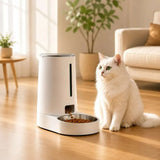
Planning to train your cat? Well, it might sound like a total challenge, especially when using an automatic feeder. But, how to train cat to use automatic feeder?
After all, cats have a well-known reputation for doing things their own way. But, in reality, cats tend to adapt much more quickly when they feel it is safe and rewarding. So, all you have to know is the right way to train them!
Because this thing is a blessing in disguise that makes your life super easier, along with ensuring your feline buddy never misses a meal. So, let’s learn the cat-approved way!
Introduce the Feeder (First Step in Training)
Automatic feeders can feel like a miracle to us, but to a cat, they are nothing more than a mysterious new machine that suddenly pops up in their territory. As a result, it can trigger a certain kind of fear or hesitation.
Hence, before the training begins, your cat must feel safe around the feeder so it can set the foundation for trust and confidence.
-
Place the feeder in their usual eating area and let them sniff, inspect, and walk around it while turned off. This, in return, will make them realise it isn’t a threat.
-
Place a treat beside it, or even a slow blink, to help them associate the feeder with good things.
-
Keep the feeder in their normal feeding zone to reduce stress levels and make the transition feel natural.
-
Avoid hiding the feeder or placing it in tight corners. Instead, keep it in open spaces where they can approach and retreat freely.
Step‑by‑Step Training Plan for Automatic Feeders
Training your cat to use an automatic feeder works best when you break the process into small, confidence‑building steps.
Besides, cats love to learn through repetition and positive experiences, so each stage should feel safe, calm, and more rewarding than ever.
Step 1 — Familiarisation Phase
Before the feeder turns on, the best is to simply let them know it exists.
Place it in their usual feeding area and allow them to sniff, inspect, circle, and observe. This quiet introduction helps your cat realise the feeder isn’t a threat, just a new part of their environment.
Step 2 — Introduce the Sound
Once your cat is comfortable being near the feeder, switch it on without dispensing food. The goal is to help them adjust to the whirring, clicking, or dropping sounds without the pressure of eating.
Step 3 — Add Food Rewards
Next, the ideal is to pair the sound with something delicious. For example, when the feeder dispenses food, offer a high‑value treat or praise. This will work as a total charm: noise = food = good things.
Step 4 — Gradually Transition From Manual Feeding
Start reducing hand‑feeding or bowl‑feeding as your cat begins to show confidence. You can now start by offering one meal from the feeder and the rest manually, then slowly shift more meals to the feeder.
Step 5 — Establish a Predictable Feeding Routine
Lastly, set feeding times and stick to them so your cat learns exactly when the feeder will activate. Predictability builds trust, and trust is what makes the feeder part of their daily rhythm.
Positive Reinforcement Techniques
Positive reinforcement is the heart of any kind of successful feeder training. And for the best part, cats respond beautifully to encouragement, gentle guidance, and rewards that make them feel safe and confident.
Here’s how it works:
-
Whenever your cat approaches the feeder calmly, reward them with a treat, praise, or gentle affection.
-
Choose treats your cat really loves, such as freeze‑dried chicken, tuna flakes, or their favourite crunchy bites.
-
Never push them toward the feeder or scold them for being afraid.
-
Place the feeder in a calm, open area away from loud appliances or busy walkways.
Troubleshooting Common Problems
Even with a great training plan, some cats need extra reassurance. After all, every animal is different from another. Below are some troubleshooting tips to help you overcome the most common challenges:
-
Place the feeder farther away and reward your cat for simply looking at it. Gradually move it closer over several days. Slow desensitisation builds confidence without overwhelming them.
-
Rub a little tuna water or their favourite treat on the bowl area. You can also place the feeder near a spot they already love, like a sunny corner or quiet nook.
-
Begin by standing near the feeder during dispensing, then slowly increase your distance over time. Eventually, step out of the room for short periods.
-
Separate feeding zones so each cat has their own safe space. If food stealing is an issue, consider microchip feeders that only open for the assigned cat.
Training Cats to Use Automatic Feeders for Wet Food
Wet‑food feeders can feel a little more “high‑maintenance” than dry‑food ones, but once your cat understands how they work, they become an incredible way to keep meals fresh and stress‑free.
-
Ice packs or chilled inserts keep the food cool, slow bacterial growth, and preserve that fresh smell cats love.
-
Begin with tiny servings. Small portions reduce odour, keep food fresher, and help your cat feel comfortable approaching the feeder.
-
Clean the feeder daily, replace ice packs regularly, and avoid leaving wet food out longer than recommended.
Are Automatic Cat Feeders a Good Idea?
Automatic feeders can be life‑changing, but they are obviously not perfect for every type of situation. Besides, what might work for someone doesn’t mean it will apply to you as well.
Pros for Busy Owners
Automatic feeders ensure your cat gets meals on time, even when you are working late, travelling, or juggling a busy schedule.
They add a huge level of convenience without compromising care, and they eliminate the “Did I feed them already?” panic mode.
Pros for Cats With Anxiety or Food Aggression
Predictable mealtimes reduce stress, pacing, and begging. Whereas, for food‑aggressive cats, timed portions prevent guarding and overeating. The feeder becomes a neutral, reliable “third party” that keeps the peace.
When Automatic Feeders Are NOT Ideal
Cats with severe medical conditions, syringe‑feeding needs, or highly specialised diets require hands‑on care.
Although automatic feeders support routine, they can’t replace personalised feeding for complex health cases.
Final Thoughts
Once your buddy realises the automatic feeder is reliable, safe, and full of delicious food, their whole routine takes a new turn. Suddenly, you will notice the changes, like becoming calmer and more predictable.
Most importantly, you will get to enjoy those peaceful mornings that you happen to miss now. After all, there is no more stress in missing their meals or chance of overeating.
FAQs
How do I get my cat used to an automatic feeder?
The rule is simple: start slow. Let them explore the feeder while it’s off, introduce the sound gradually, and pair dispensing with their favorite treats or praise.
Why is my cat afraid of the automatic feeder?
The noise, movement, or unfamiliar shape can trigger a kind of caution. Hence, desensitisation, distance training, and positive reinforcement can help them feel safe and confident.
How long does it take to train a cat to use a feeder?
Most cats adapt within a few days. However, shy or anxious cats might need 1–2 weeks.
Can I use an automatic feeder for wet food?
Of course, as long as you use ice packs, sealed compartments, and clean the feeder regularly to keep food fresh. In fact, wet‑food feeders work beautifully when maintained properly.
Will an automatic feeder help with overeating?
Absolutely. Timed portions prevent grazing, food stealing, and overeating, making automatic feeders ideal for weight management and multi‑cat homes.
What if my cat only eats when I am nearby?
Well, build independence gradually. Start by standing near the feeder, then increase distance over time.
Once they understand how it works, the predictable schedules will help them feel secure even when you are not in the room. Just give some time!